


Sneakers take back the runway, and luxury lowers the drawbridge
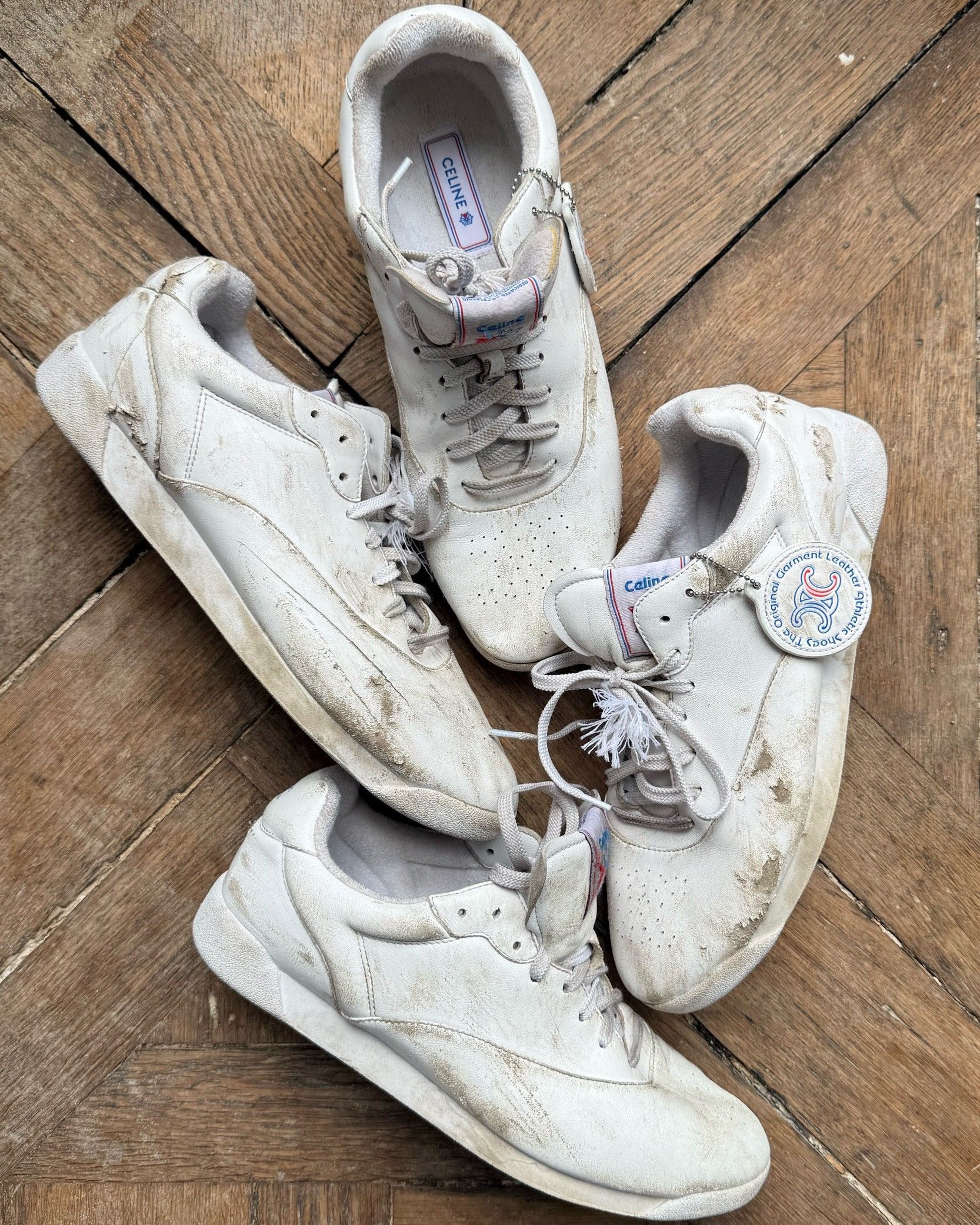
A Reebok Freestyle. Old, beaten up, the sole yellowed like a gym shoe forgotten in the basement. Except that in Paris it walks under the banner of Celine, and suddenly it is the most coveted object of the week. Plot twist? Yes and no. Or rather, as usual: up to a point.
Because the sneaker, let's be honest, never really left. What had disappeared from the high-fashion runways was the courage to put it centre stage. And now they are all coming back to it, one after another. Anyone who makes a living from fashion, who designs, who sells, who fills a shop window or a showroom, would do well not to dismiss it as a seasonal whim: it is a signal, and it tells us a great deal about how luxury has decided to talk to us.
The show that looked like a shoe market
The tally alone says it all. Rick Owens bending adidas to his gothic liturgy. Sacai arm in arm with Birkenstock. Kenzo dipping into the France profonde of Paraboot, Nahmias calling Puma, Mowalola reworking the Air Jordan, Auralee whispering its idea of Japanese silence over a New Balance. Willy Chavarria shows with UGG and takes his final bow wearing adidas, just to make clear which way the wind is blowing.
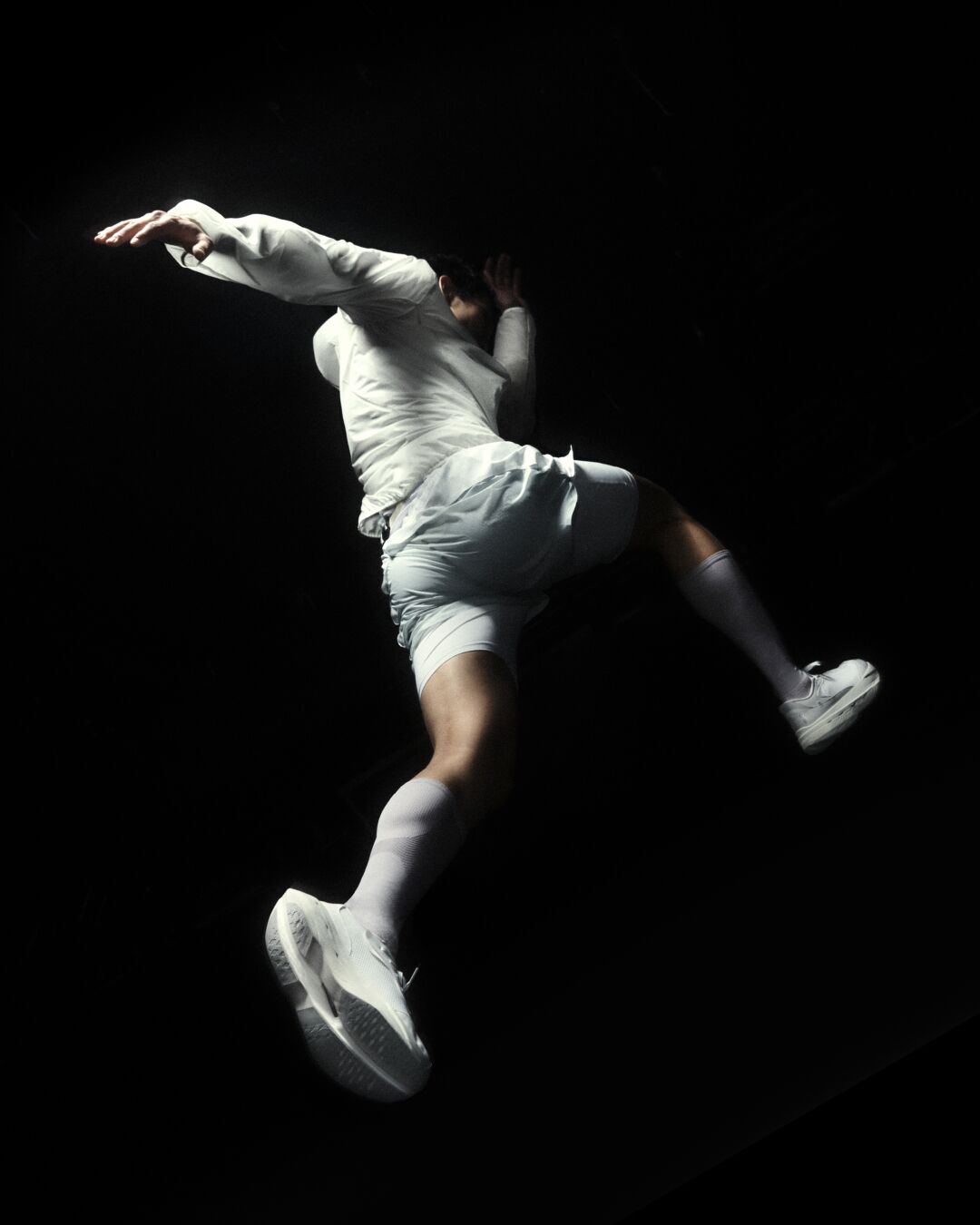
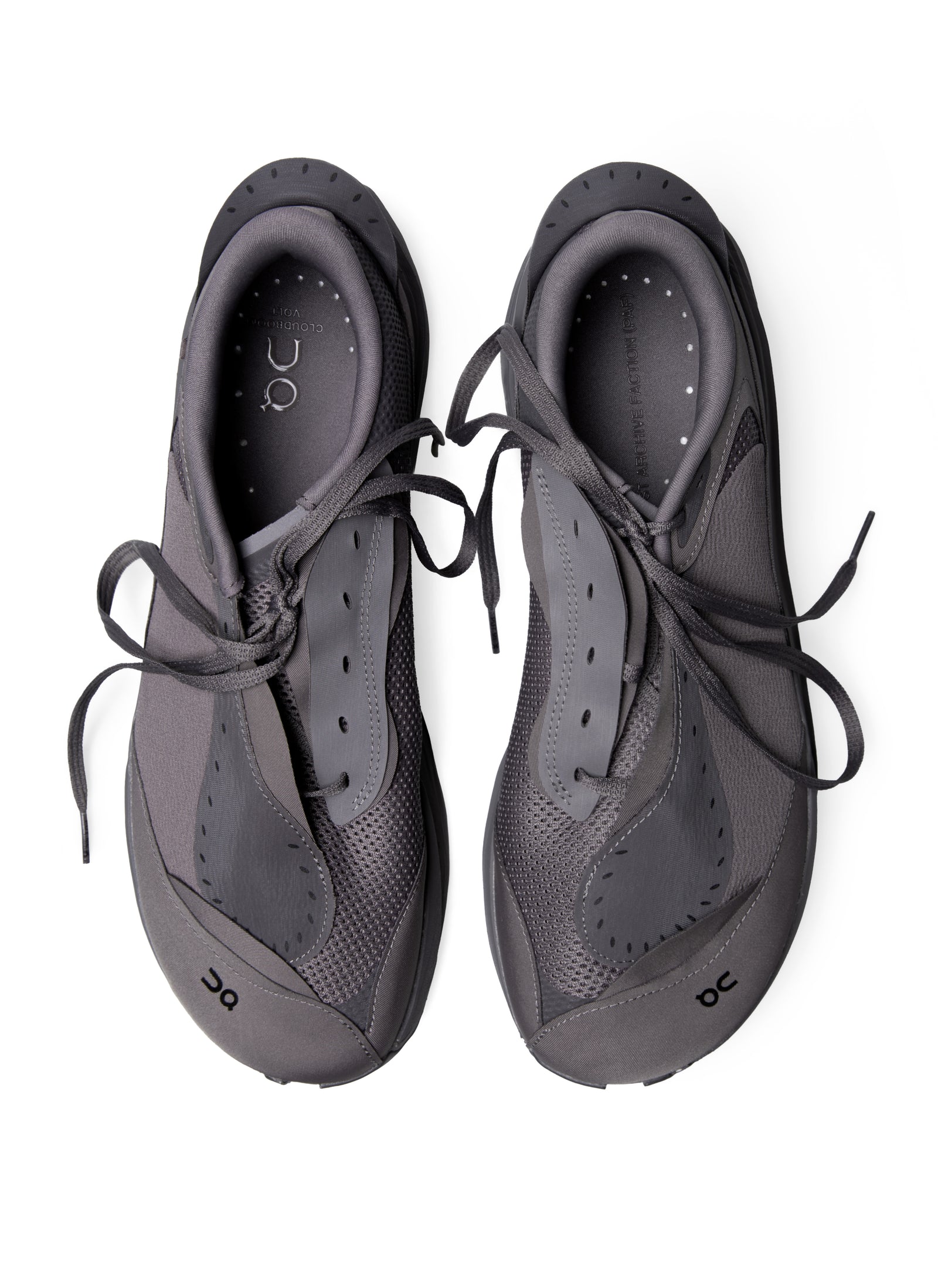
Then there are two objects that, I admit, made me stop. The first is the Comme des Garçons Homme × New Balance 1226: glossy leather layered over dense mesh, the “N” barely hinted at, a sculpted, massive midsole, only two versions, total white and total black, because Rei Kawakubo rarely needs colour. It is not a shoe, it is architecture. The second is the Post Archive Faction × On “Current Form 4.0”, where the Koreans take a marathon Cloudboom and warp it into an avant-garde object, without giving up a gram of technology. Two worlds far apart, conceptual Tokyo and technical Switzerland, ending up saying the same thing: the sneaker, today, is worth staking your reputation on.
Why they are back: the price disease
Here the matter gets interesting, and a touch cynical. Luxury has a disease it gave itself: prices. It pushed them so high, year after year, that a huge slice of people, the ones who dreamed of the bag and every now and then bought it, threw up their hands and walked away. Cutting prices, though, is unthinkable: it would be like admitting to years of bluffing.
So here is the trick: the collaboration sneaker. An object still expensive but within reach, giving you a little piece of the Celine or Comme des Garçons world without touching the sanctity of the main price list. They call it loss-leader luxury. I call it, more simply, this: it lets you back in, price tag in full view. Put even more plainly: to get Celine's disdainful chic you no longer need to buy Celine, the right Reebok will do. The drawbridge has been lowered, and fashion has decided to let some people into the castle. While keeping careful watch, however, over which gate.
The price strategy, explained without beating around the bush
Because collaborations are not generosity: they are price engineering. And every house plays its own game.
- Jil Sander × Puma sits around 430 euros. Jil Sander's “in-house” sneaker costs nearly 890. The collaboration costs, quite literally, half: it is the discounted entrance to the maison's minimalism.
- Miu Miu × New Balance plays it the other way round: it is priced about a hundred euros above the corresponding New Balance model, just enough to make it desirable without pushing you towards the real Miu Miu-branded sneaker.
- Versace × Onitsuka Tiger, crocodile leather, placed in the middle band of the Versace price list and already sold out. A swipe of the claw.
- JW Anderson × Diadora is the other side of the coin: a brand with no sneaker of its own using the collaboration as the store's “affordable” object, the point of entry for those who will never spend four figures.
The shoe is the bait, the price is the hook, and the runway is the most expensive shop window in the world. Simple.
The way we were: the binge, then the fall
You only understand that this comeback tastes different if you remember how it ended last time. The first boom, some ten years ago, exploded together with streetwear: take a silhouette that already exists, change a couple of details, slap a big name on it and resell it at a multiple of the cost. Minimal investment, enormous return. On paper, perfect.
Then the bubble burst. Daily releases, ever more improbable collaborations, reseller bots making the market inaccessible to those who actually wanted to wear the shoes rather than flip them. And there is one moment many point to as the last straw: the Air Force 1 born from the meeting of Nike and Tiffany, the “luxury” sneaker that smelled more like a marketing exercise than desire. From there the phenomenon slid underground: not dead, the numbers stayed high, but hidden. Designers know very well how the party ended. And this time they are trying to dance differently.
The new code: no logo, no noise, “if you know you know”
And here is the most interesting part. This season's collaborations are deliberately hushed: minimal, almost logo-free, all silhouette and materials, zero shouty graphics. The Comme des Garçons in white or black, the faux-worn Celine, the whispered Auralee: objects that do not scream their name, meant to be recognised rather than flaunted. A luxury for initiates. The same logic as quiet luxury, brought to the shoe. The exact opposite of the giant logo of ten years ago.
Our take
Here is how we see it. This comeback is neither a creative whim nor a passing fad: it is an economic answer dressed up as a trend. Luxury raised prices as long as it could, lost part of its audience along the way and now, instead of admitting it by cutting prices, reopens the door with a sneaker in hand. A clever move, it must be said, and now and then a beautiful one: the Comme des Garçons New Balance is real design, the Celine for Reebok is a cultural short circuit that works.
But it is also an ambiguous move, and people in the industry would do well not to mistake it for generosity. The collaboration brings the spike in sales and hype, almost never the loyalty that a well-made “in-house” sneaker gives you: the stories of Dries Van Noten or Margiela are there to prove it. For a boutique, for a showroom, the right question is not “which collaboration do I order”, but “does this collaboration bring me a customer who comes back, or just one who passes through once and then resells on an app?”. Over the long run, that difference is worth far more than day-one sell-outs.
The drawbridge, for now, stays down. Enjoy the shoes, because some of them truly deserve it. But do not take it for generosity: whoever lowered it knows exactly why they did. So, are you falling for it or not? Tell us what you think.


Comments
No comments yet. Break the ice!
Log in to comment