


Catwalk politics
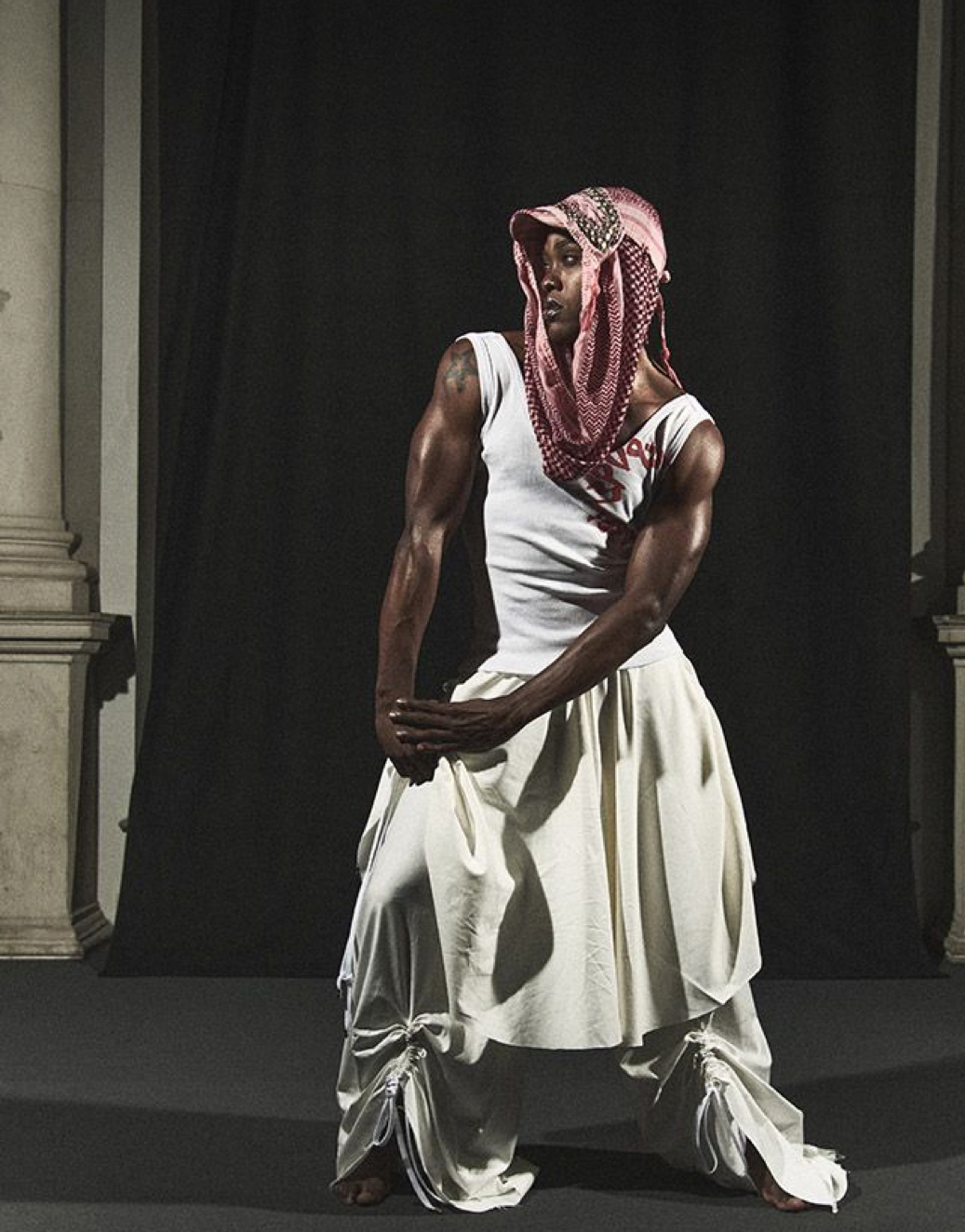
You must live is the autumn/winter collection inspired by Palestine presented by Salvatore Vignola at Palazzo Giureconsulti in Milan on February 23. It is a great opportunity to reflect on the potential of fashionand art as political actions and components of cultural memory. The event concept, realised by the Egyptian artist and activist Aya Mohamed, was developed from the poetry If I must die, composed by Refaat Alareer. In these verses the poet, who died during an air strike on December 6, hoped that if something happened to him, his clothes were used to make a kite visible to a Palestinian child. And so it was, figuratively speaking. Starting from the clothes, a team made up of artists, designers, musicians, photographers and ballet-dancers has given rise to a cross-cutting storytelling reinterpreting typical Palestinian items, as the kefiah or the thobe, in a respectful and universal way. Focusing also on environmental sustainability, the collection was made of tissues donated by Readymade textiles, a project aimed at redistributing deadstock made-in-Italy fabrics. Moreover, as concrete act, every item of this collection has been sold during the event, to donate the proceeds to Palestine Red Crescent Society.
Heritage and identity
This event was scattered with identity symbols: starting from the collaboration with Palestinian Sound Archive (a digital sound archive of traditional Palestinian music), ending with the massive presence of olive-trees (metaphor for the Palestinian identity and symbol of the struggle against oblivion) that defined an artistic representation of memory, made not only with clothes. The heritage reinterpretation was a viable path to underline the imprint left by this people. Beyond the rubble.
Fashion, politics, activism
Fashion has strong roots in activism: from power dressing during the seventies, «a way for women to establish their authority in professional environments», via Vivienne Westwood’s iconic collections, ending with Alexandria Ocasio Cortez’s dress worn for the Met Gala in 2021, on which appeared the «Tax-the-rich»message. Furthermore, also Miuccia Prada states that her clothes are useful to «make women feel smarter». This visceral-and-controversial relationship between fashion and politics has been an enormous topic of discussion: on one hand someone regards it as a suitable means of expressing (due to the big echo that may generate), on the other hand there is someone convinced that it consists only in marketing strategies to catch public interest far away from the not-sustainable-practices of the fashion brands. A groundbreaking storytelling is fundamental for this sector, which interprets the changes of our age from a semiotics perspective. Due to this expressive potential, is important to combine activism with concrete actions, as Salvatore Vignola masterfully did.


Comments
No comments yet. Break the ice!
Log in to comment