


Poor Things and how emancipation is also a matter of dressing
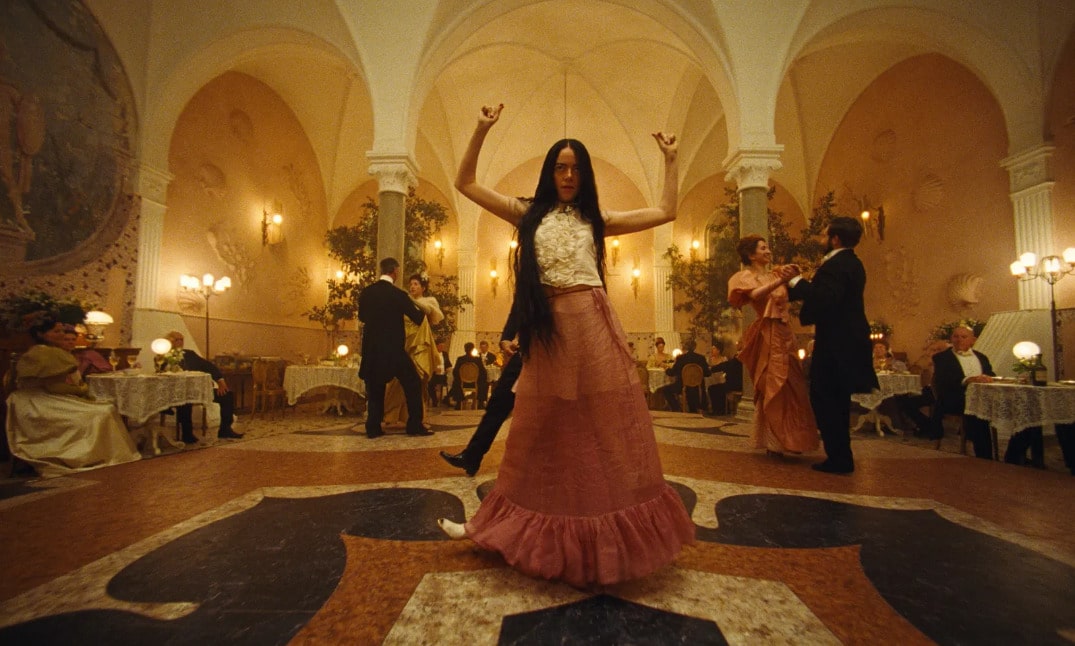
Poor Things (in Italian, Povere Creature!) was released in Italian cinemas on January 25, 2024. Through a clever word-of-mouth it creeps into the lenses of movie buffs and then ramps up before the eyes of all who, intrigued, are about to sit in the red seats and admire the meticulous, avant-garde, and wacky work of Greek director Yorgos Lanthimos.
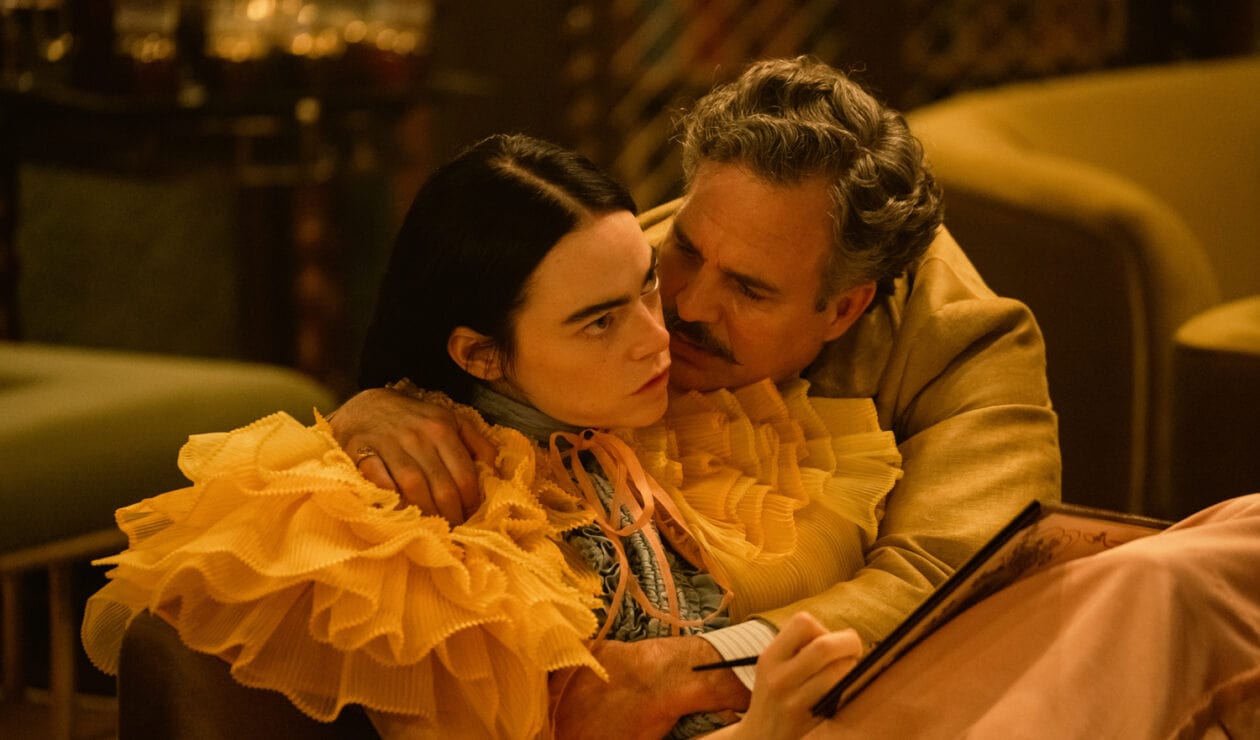
One would be hard pressed to find even a thinly veiled resemblance to Frankenstein in the story, so much so that many have called Lanthimos' work "the feminist Frankenstein." Bella Baxter, masterfully played by Emma Stone, is the experiment of Dr. Godwin Baxter (Willem Defoe) who restores life to her - then - beloved. The Victorian character of Bella is nothing more than a woman tired of the events of her life, determined to throw herself from a bridge, she is defeated, perhaps too desperate even to give birth to the child she was carrying. The doctor, called throughout the film "God" by Bella herself, and not without reason, implants the infant's brain into the woman's head, who from then on must learn, little by little, to recreate a space and an identity for herself.
This same identity, at times naïve, but then strong and placid, distinct and true, also comes through the stage costumes. The incredible work of delineating Bella's character and life stages through the clothes is the brainchild of Holly Waddington, a designer already known for making the costumes for Lady Macbeth (2016) and The Great (2020).
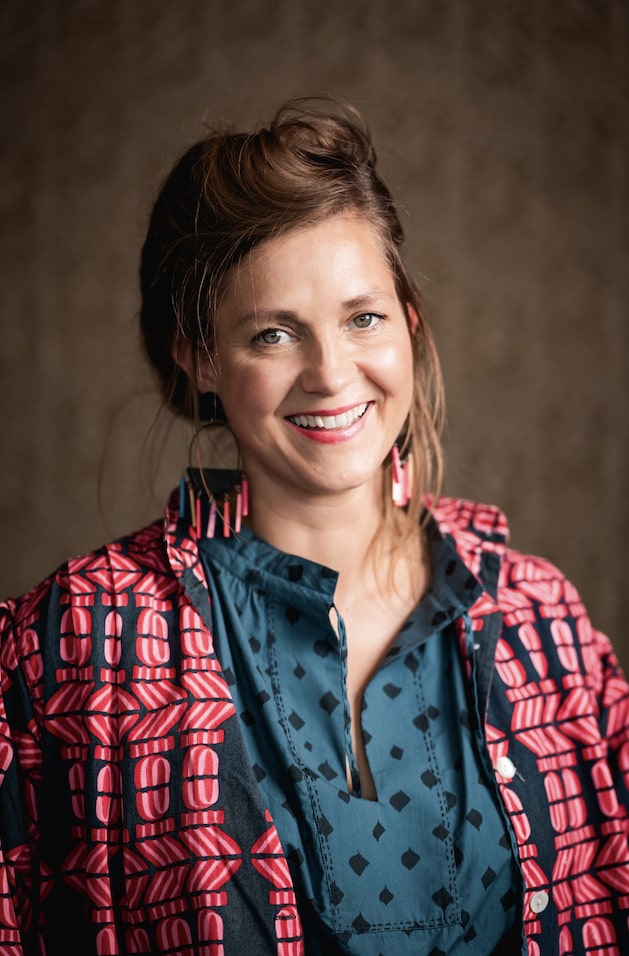
Poor Things is a comic sci-fi film set in the late 1800s; we are in the Victorian era. However, while the outfits of those in this story arc are in keeping with the era, Bella steps outside the box and screens thanks in part to a stylistic code that deviates in some ways. Holly Waddington herself admitted that she took inspiration from an Egon Schiele painting for Bella's long raven hair, and drew on futuristic designs by Courréges as well as Italian Schiaparelli.
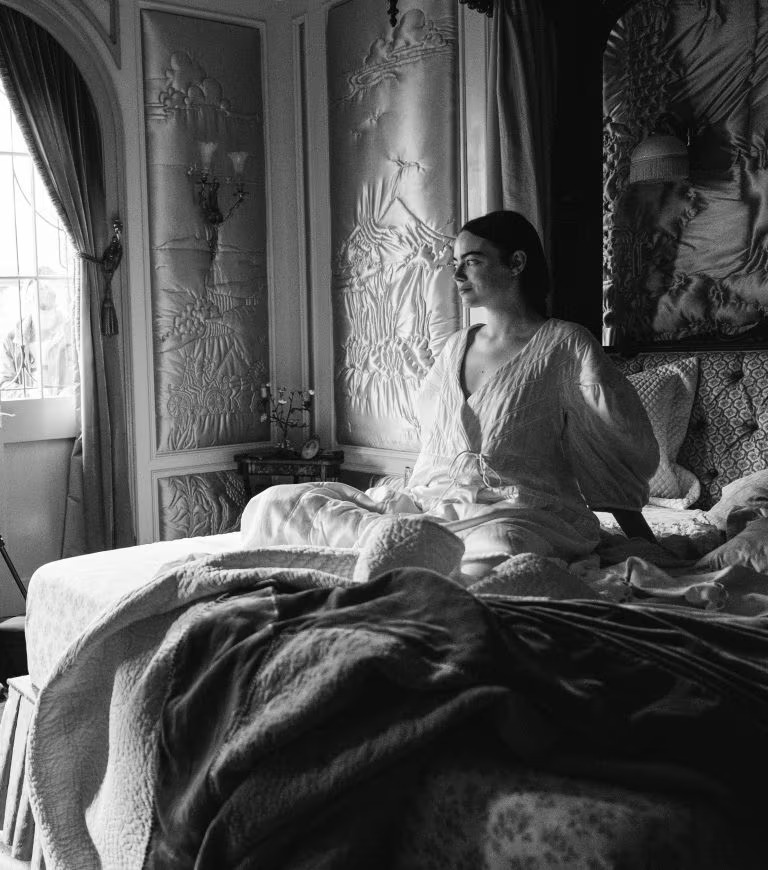
The first part of the film reveals Bella's first steps into the world, an infant learning to utter her first words, cluttering the square meters of the immense house in which she lived in an awkward and mechanical manner. The clothes here are baby dolls that keep her legs uncovered, nightgowns and even a bustle cage that keeps her imprisoned in her semi-reclothed condition. The film's black-and-white colors suggest that the clothes are light, associated with the purity of a period of growth; but we are still spectators of black-and-white, which creates an obvious disconnect with Bella's liberation phase.
When the protagonist arrives in Lisbon there is finally an explosion of color, joy, and discovery. Bella leaves her lover Duncan in the room to go
explore the city and does so wearing a white shirt with ruffles in
the front, a short jacket with voluminous, high shoulders, and a pair of short
canary-yellow shorts. She also moves differently, her hair is loose, free of
restraints, her movements more fluid but still not to her full potential. Rebellion, even toward her lover Duncan, comes through a bright yellow, rich dress, a layered mimosa, which she puts on for the first time at a
restaurant in the presence of strangers.
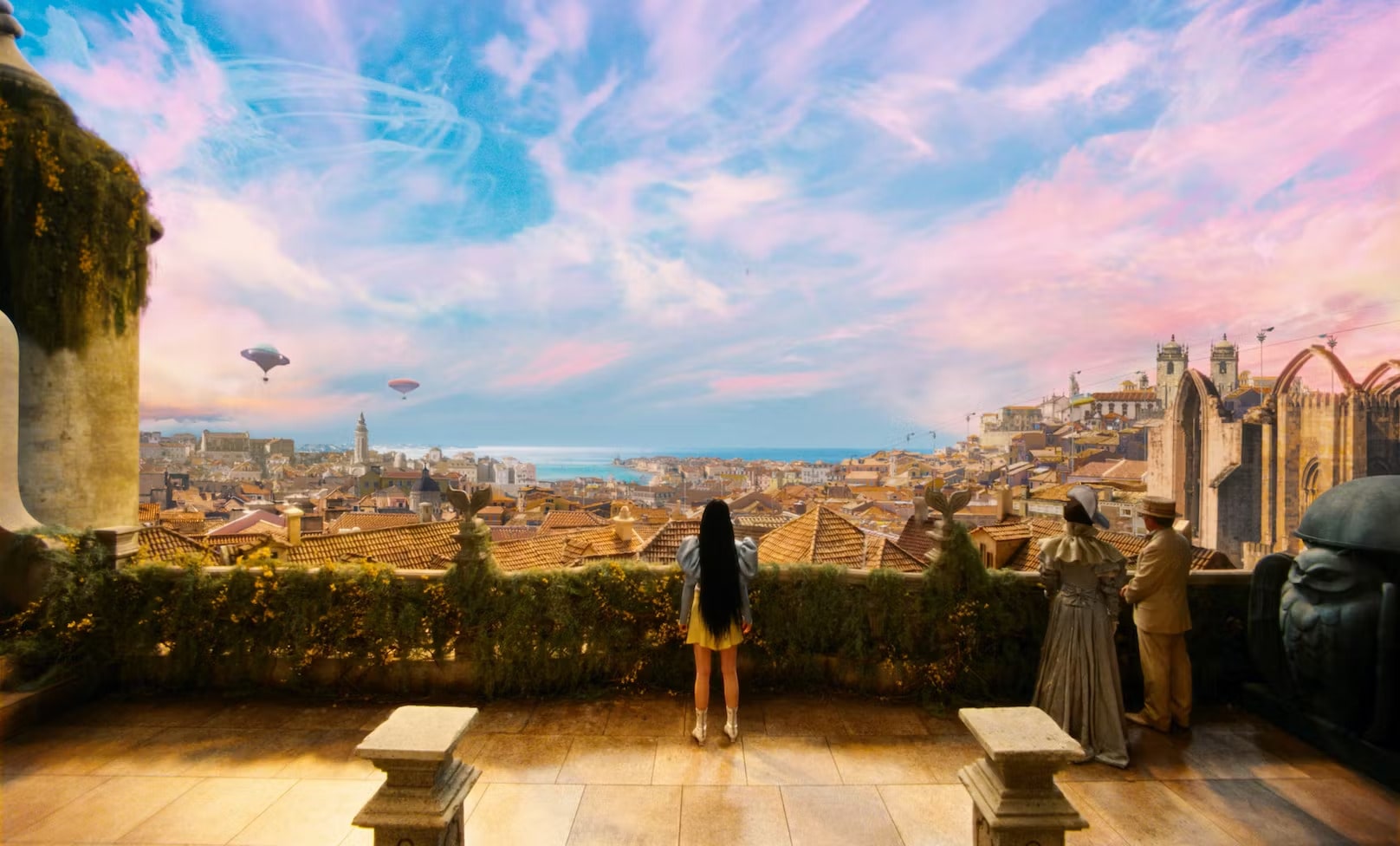
From Lisbon we travel to Greece, where the exploration of the self is dipped into greater awareness and knowledge of human misery. The clothes sadden with her, almost return to those of childhood and simplify into a T-shirt and shorts for the night, except to explode in the cult scene of wild dancing with Mark Ruffalo (Duncan).
Clothes evolve throughout the acts of Bella's growth as a person, so in Paris we see her asserting her personality again. Holly Waddington states that the mango yellow cloak contrasting with the snow was inspired by a condom, to give an ironic twist. Bella then strips down, gets dressed up, but in light colors, pastels and pinks, uses transparencies. Then her acculturated, curious, knowledge-laden version was born, and on this occasion we find her chameleon-like in the environment of medical students: so here she is in a heavy woollen fabric jacket, boots and gray socks below the knee. More austere, but always sparkling and never boring. In fact, the legs are not covered but are instead enhanced by the cut of the jacket.
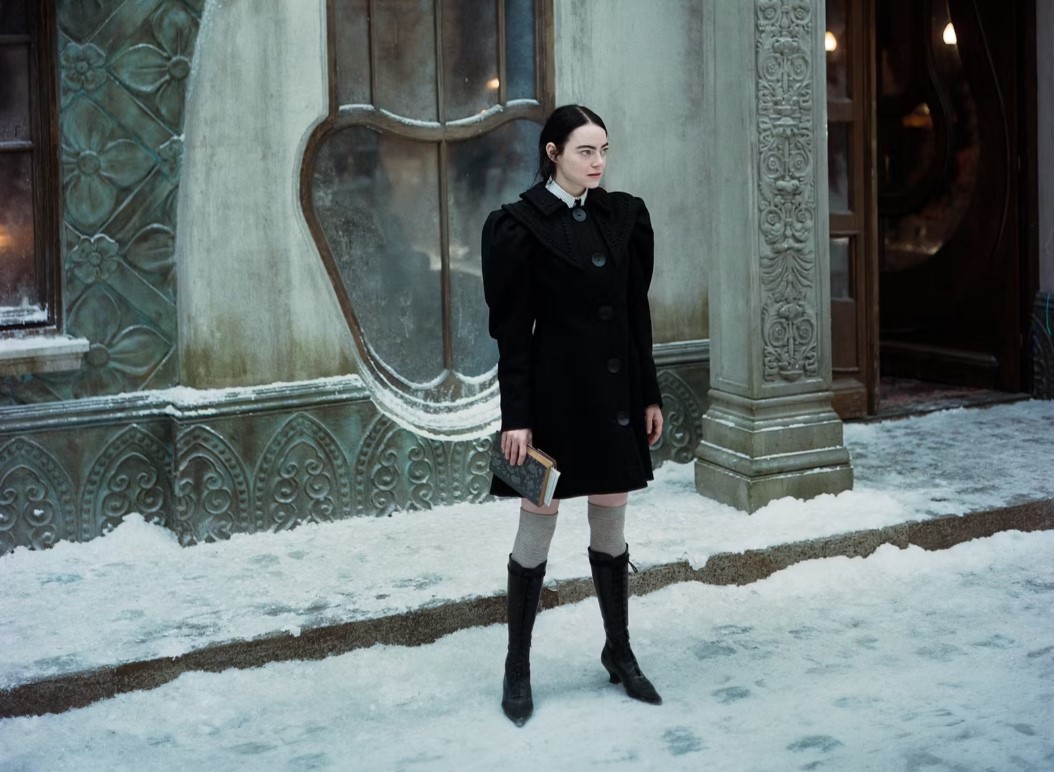
Holly Waddington has created a narrative within the narrative, giving life to the experimentation of a woman who emancipates herself socially and sexually, she does it through the materials of the clothes she uses, through the play of volumes and contrasting combinations, she does it with the colour yellow, canary, bright, mango - the true fil rouge of the clearest awareness on the part of Bella who wants to impose herself on society. And she succeeds.


Comments
No comments yet. Break the ice!
Log in to comment