


Letter to the future - Yohji Yamamoto
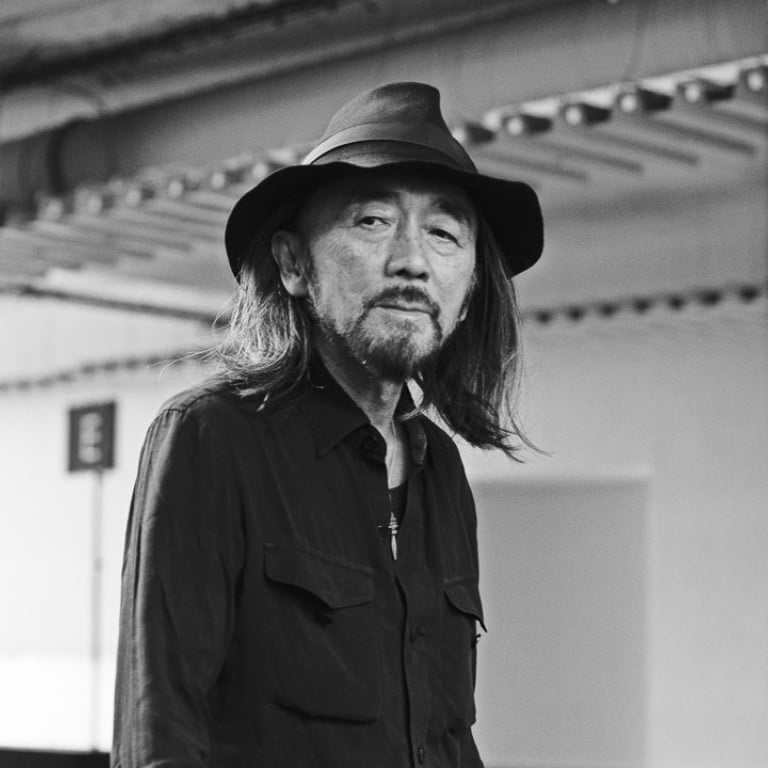
Yohji Yamamoto is a Japanese designer who has been reflecting on the human body since 1970 through the structure of clothes designed and created as multiform sculptures.
His story begins in a crucial historical moment for Japan, which is marked by the Second World War and the atomic bomb.
Following the death of his father, Yohji's mother decides to open a small tailoring workshop. In this period of sacrifices and deprivations, Yamamoto inherits the rigor and essentiality but also the admiration for the female figure and the interest in tailoring.
After completing his law studies in 1966 he enrolled at the prestigious Bunka Fukuso Gakuin fashion school in Tokyo, where he won a scholarship that took him to Paris.
The meeting with the French capital defined his desire for deconstruction and overturning patterns and pushed him to return to Japan in 1972 where he started his brand Y's.
He therefore begins to experiment with the union of apparently incomplete garments with the sobriety of black and large and unruly shapes with a punk and gender fluid aesthetic in which the female silhouette is never objectified or sexualized.
This interpretation of him makes Y's recognizable and successful, leading him to parade on the Parisian catwalks and to various collaborations with brands of the caliber of Hermès, Yeezy and Lamborghini, just to name a few.
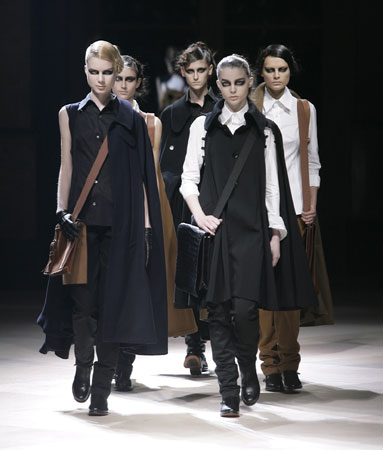
Yohji Yamamoto is recognized for having challenged the conventions of style and for having redefined the idea of beauty by subverting stereotypes and gender conceptions, thus creating a new geography of the body in a universal silhouette.
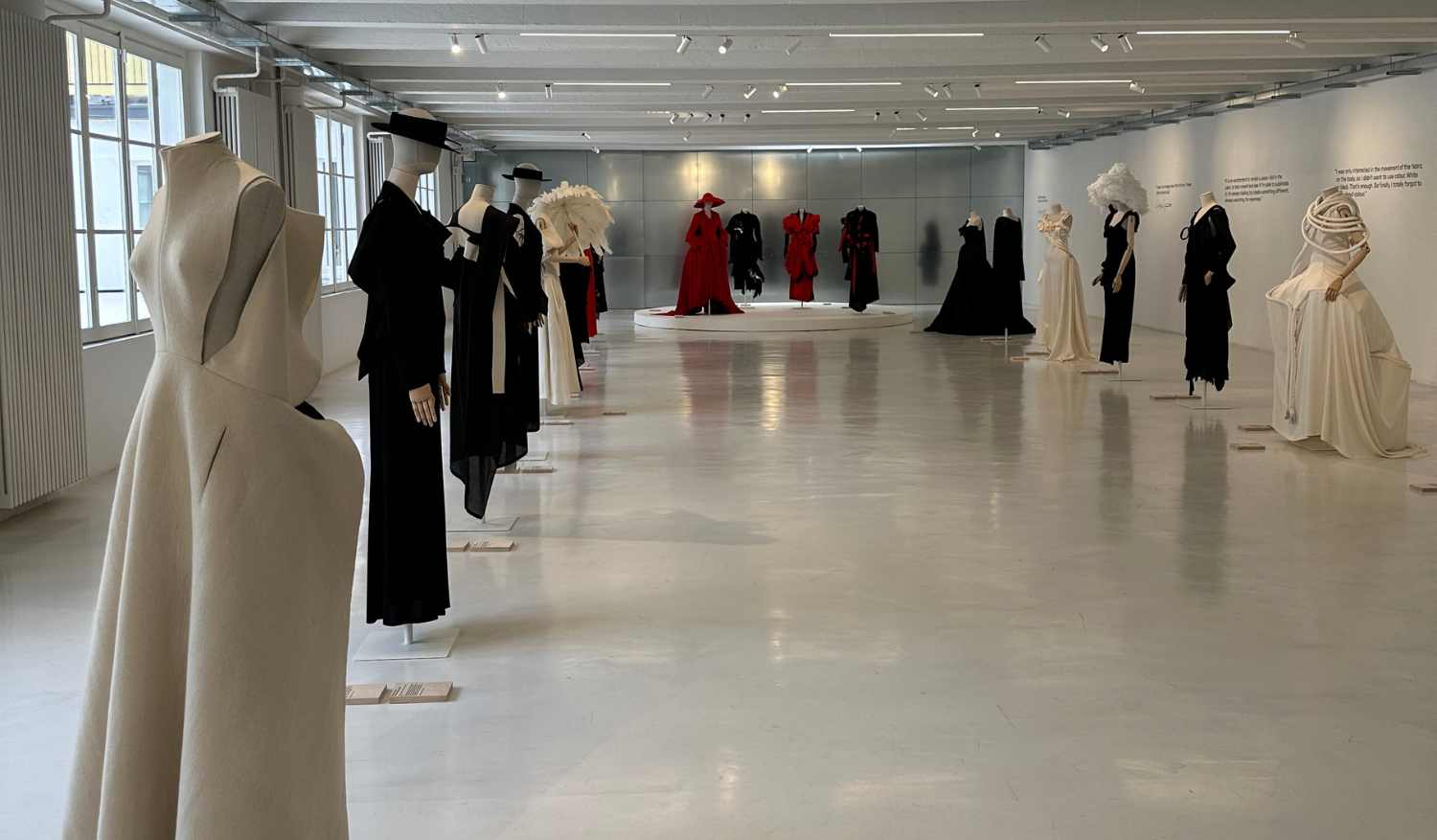
It is precisely the clothes that write the white space of the 10•Corso•Como Gallery, a space dedicated to the reflection that the languages of contemporary creativity activate around the culture of the image.
Through absolute colours, a path conceived as a single installation is defined. A parade of blacks and whites culminating in a red heart that enclose a single thought: fiery and future perspective.
This new project questions the rules of fashion exhibition, rejecting any form of monumentality of the dress and seeking an active relationship.
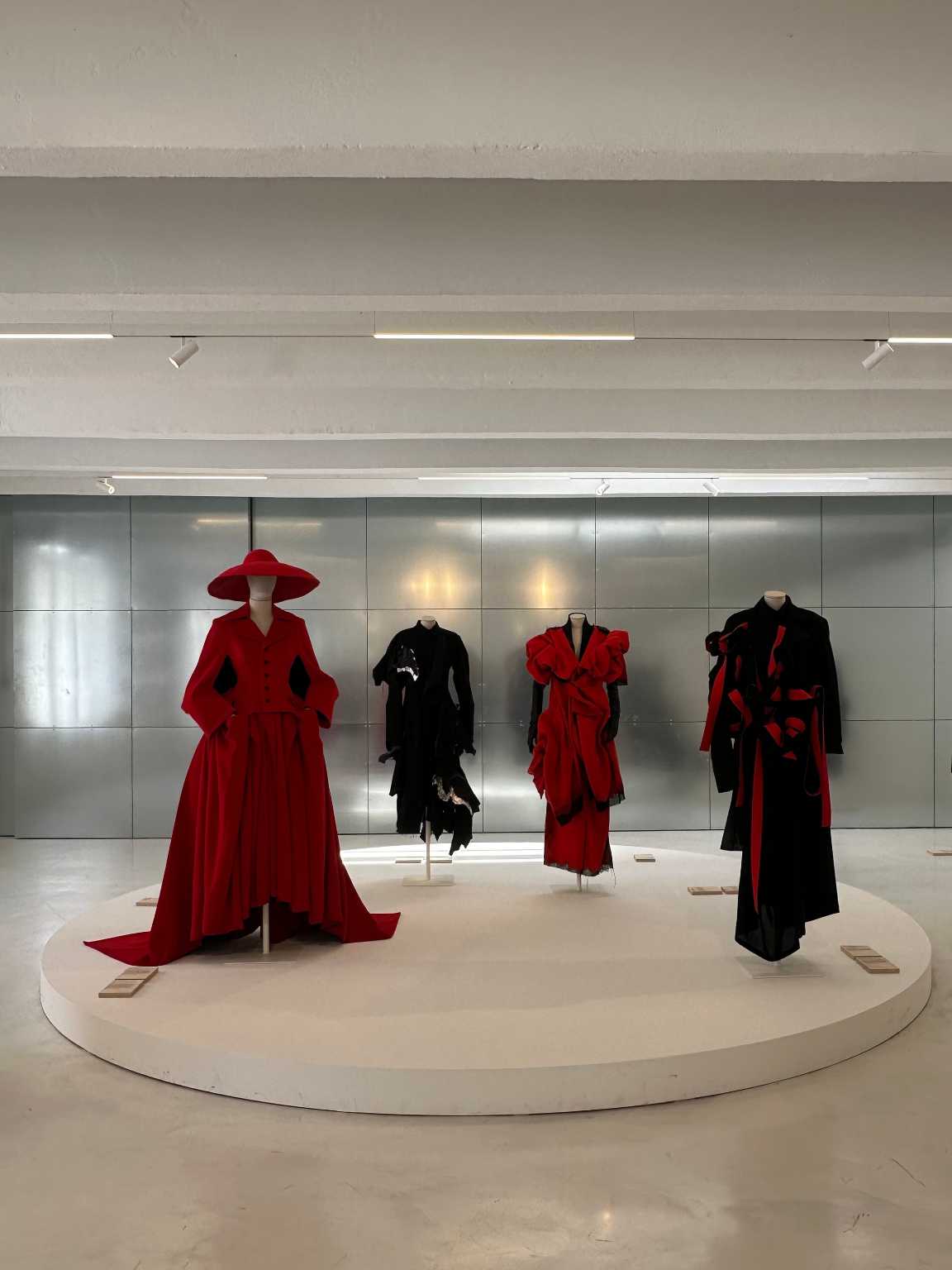
Letter to the future is an event that brings together 25 archive items from the Yohji Yamamoto collection from different eras and seasons, starting from 1986 to 2024.
The exhibition can be visited from 16 May to 31 July 2024 at the 10•Corso•Como Gallery, curated by Alessio De'Navasques, professor of Fashion Archives at the Sapienza University of Rome.
De'Navasques, through the setup without scenographic elements but only with sartorial busts similar to those of an atelier, managed to obtain a perfect mix by alternating iconic garments from yesterday with those of today. The only protagonist is the ability to dismantle and reassemble archetypes giving his personal vision of the present, past and future.
Yohji Yamamoto's letter to the future is addressed to his mother, a fundamental figure in defining his creative identity and his brand.
Thus begins a path of correspondences between his reflections on the meaning of the future and a selection of archive garments that demonstrates his relationship between body and dress in overcoming the dimension of time.
In his volumes there does not seem to be a beginning or an end, precisely because the air circulates between the body and the fabric and the dress seems to breathe without the constraints of a predefined shape.
His insistence on imperfection is linked to one of the concepts of wabi-sabi philosophy which manifests itself in an acceptance of impermanence and incompleteness in an object. It is precisely that sense of timelessness conveyed by the idea of the "unfinished" nature of his processes, the unconventional way of treating fabrics.
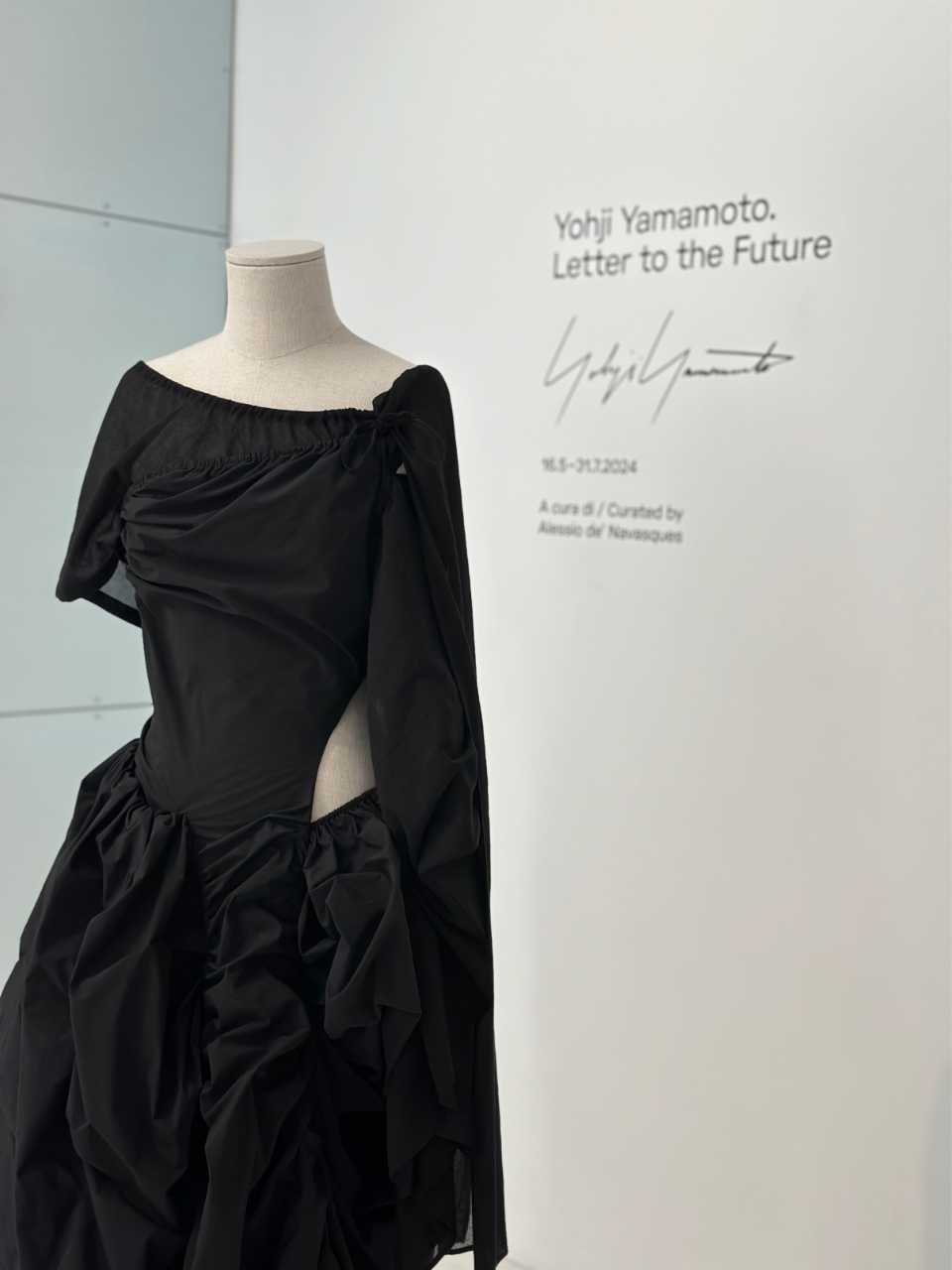
Through his clothing creation process, Yamamoto revolutionized the relationship between garments and people as a universal message of freedom.
In his vision the body is not made an object but is a body that acts on the dress and transforms it.
“We are witnessing a historical moment in which, just as happened in the years of its debut in Europe, physicality seems to have freed itself from superstructures and gender stereotypes, yet we are overexposed and continually judged as happens on social media,” declared the curator Alessio .
This is therefore the hidden message of the exhibition: perfect imperfection and the concept of body positivity which today more than ever is a very important theme.
The clothes are part of a flow where every shape, cut and geometry convey an idea of a future beyond time. It is therefore, precisely, a letter to the future so as not to forget the past and the present.


Comments
No comments yet. Break the ice!
Log in to comment