


The impossible grail returns: the Air Jordan 7 "Miró" resurfaces after eighteen years
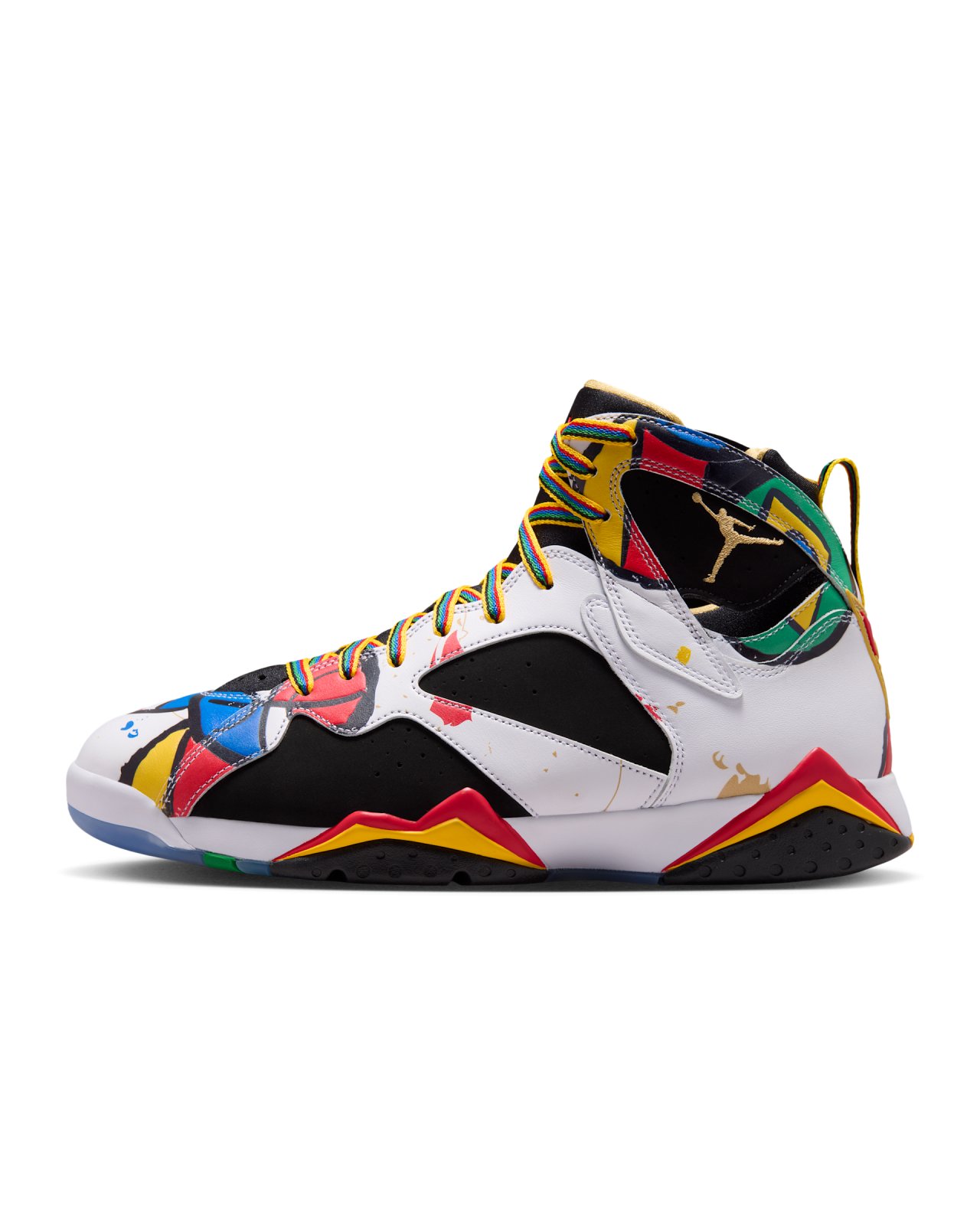
There are rare sneakers, and then there are sneakers almost nobody has ever seen in person. The Air Jordan 7 "Miró" belongs to the second category: released in 2008 in a minuscule run, for eighteen years it remained one of collecting's great unattainable dreams, with prices steadily in four figures. On July 10, 2026 the dream suddenly became attainable: Jordan Brand brought its tribute to Joan Miró back to the shelves for the first time since then.
Why Miró, of all artists
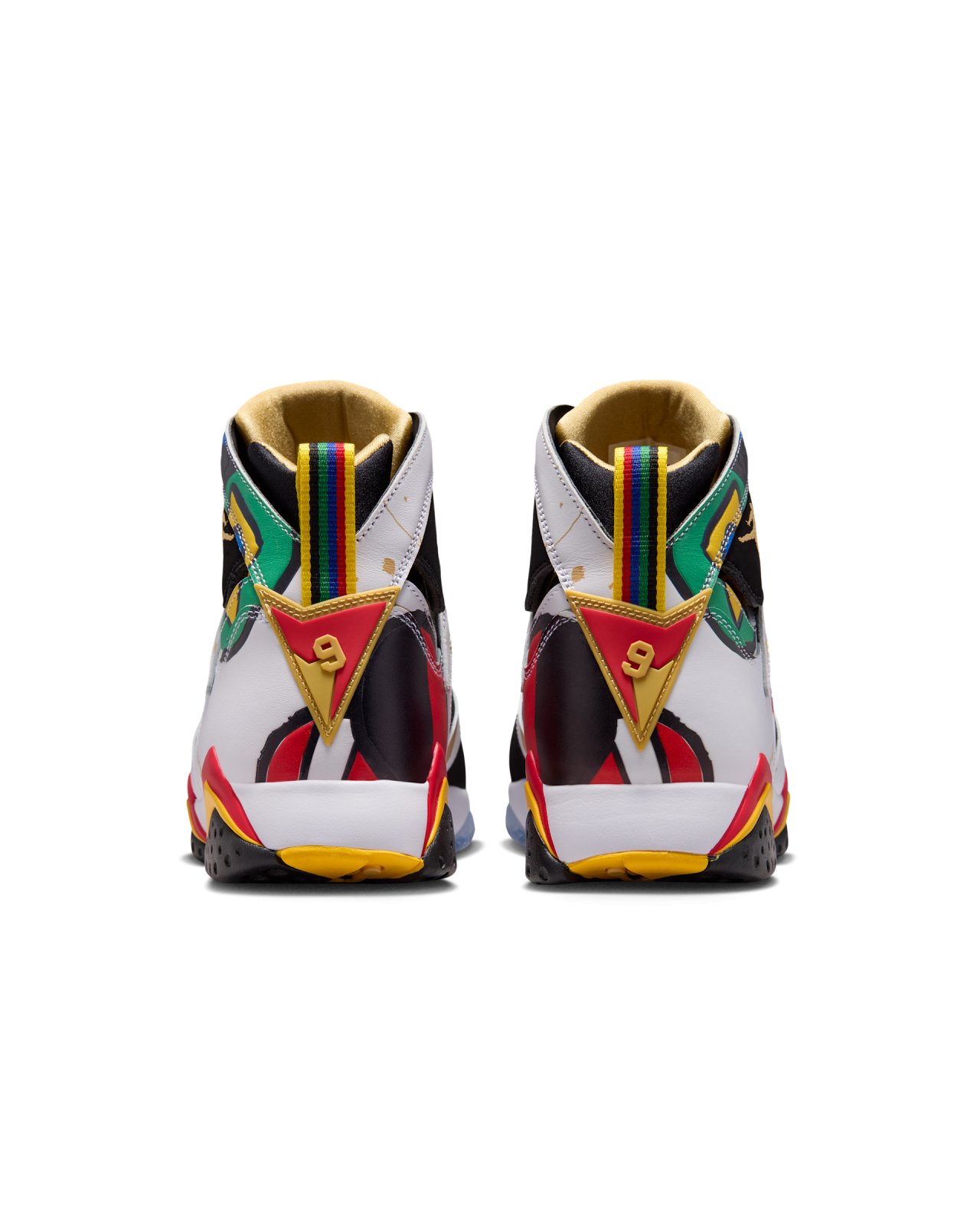
To understand this shoe you have to go back to Barcelona 1992. The Air Jordan 7, designed by Tinker Hatfield, is the shoe Michael Jordan wore in the summer of the Dream Team, the most celebrated Olympic squad of all time: eight wins out of eight, gold medals around their necks, and on MJ's heel not the usual 23 but the number 9 of the American uniform. That "Olympic" colorway became the stuff of legend along with the tournament itself.
Joan Miró, a Catalan from Barcelona, is the other thread leading to the same city. His fluid shapes and primary colors, that way of painting which rejected academic realism in the name of an almost childlike freedom, became a public symbol of the Catalan capital, from the Dona i Ocell sculpture on down. Putting his art on a Jordan 7 closes a circle: the city of Olympic gold and the city of the artist are one and the same. Nike, in the official presentation, speaks of two nonconformist pioneers who refused labels and turned their disciplines into cultural movements. Hard to argue.
The Seven, a shoe already in the history books
To be fair, the Jordan 7 did not need Miró to matter. In 1992 Hatfield designed it by abandoning the visible Air and the flashy design of the Jordan 6, in favor of a leaner, more foot-hugging silhouette, with those geometric panels and touches of color that made it instantly recognizable. It was the shoe of Chicago's second consecutive NBA title and, indeed, of the Olympic summer: in the United States jersey with the 9 on his back, Jordan closed the Barcelona tournament as the team's top scorer. Thirty years later, in 2023, a signed, game-worn pair of his "Olympics" sold at Sotheby's for over $114,000. It is on this layer of history that the Miró built its myth.
The 2008 release: a thousand pairs and a legend
The first "Miró" arrived on July 3, 2008, with style code 323213-161 and a retail price of $175. It dropped while Jordan Brand was celebrating the run-up to the Beijing Games, but the design looked entirely to Barcelona. According to reconstructions in the specialist press, around a thousand pairs were produced worldwide, distributed almost exclusively in Europe. The outcome is well known: the shoe vanished instantly, and ever since, a deadstock pair on the secondary market has typically traded between $1,500 and $2,500, with peaks above $11,000 for the rarest sizes. A grail in the literal sense: something you chase knowing you will probably never catch it.
What the 2026 reissue looks like
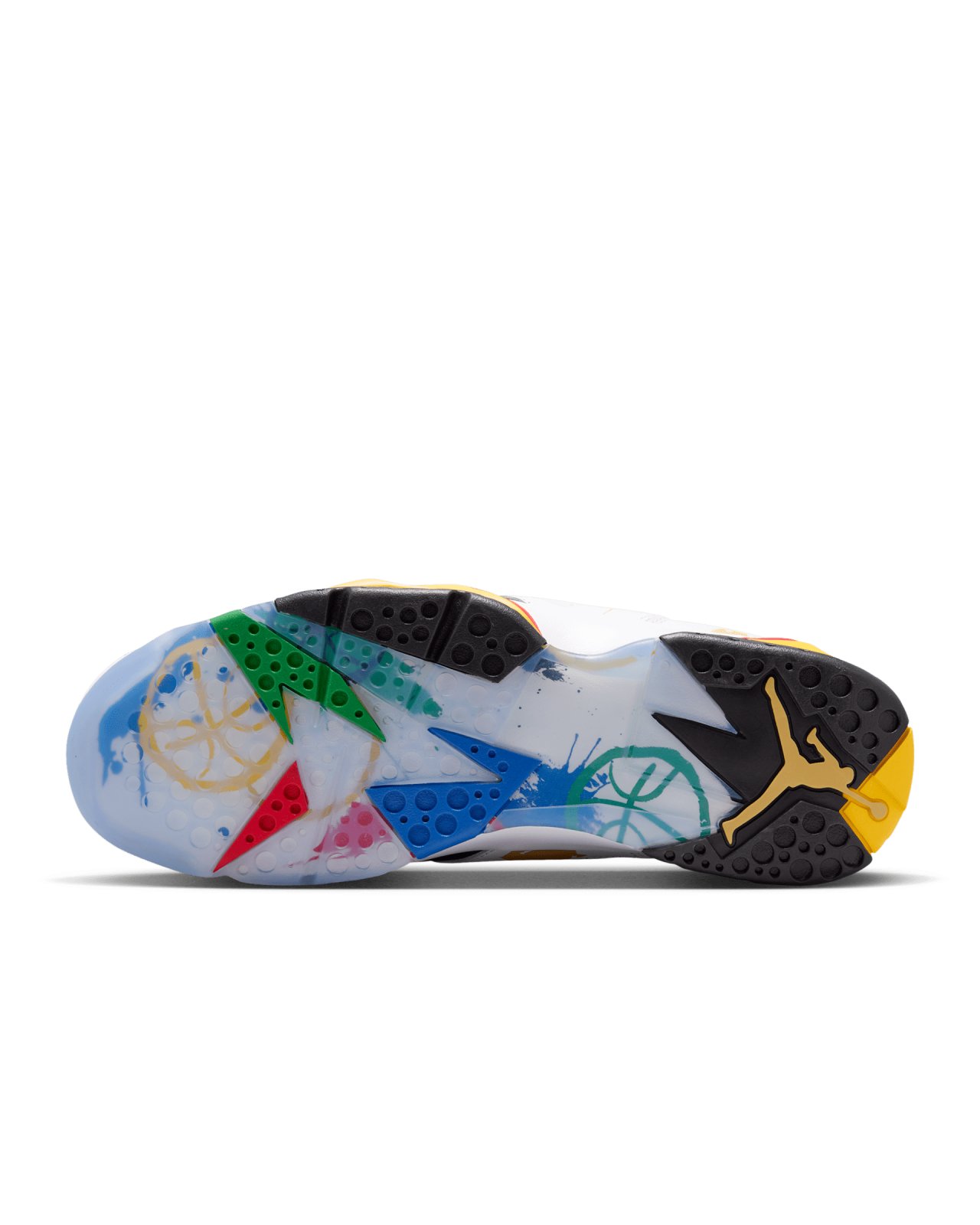
The 2026 retro (style code IQ6573-100, official colorway White/Metallic Gold/Sport Red/Varsity Royal) is an unapologetically faithful remake. The white leather base acts as the canvas: across the collar and toe explodes the abstract collage inspired by Miró's works, black nubuck panels hold the composition together, and a gold Jumpman finishes it off. At the back, the red heel triangle carries Barcelona's gold 9. Underneath, the translucent sole hides the most playful detail: basketballs, lightning bolts and doodles that look straight out of the artist's sketchbook.
There is a collector's touch too: as in 2008, the box includes five extra sets of laces, one for each color of the Olympic rings. What changes completely is availability: no thousand-pair run this time: the 2026 Miró released on SNKRS, on Nike.com and at major retailers as a wide release, at $255.
A grail democratized, a grail deflated?
The question dividing collectors is inevitable: is a reissued grail still a grail? The value of the 2008 original rested on absolute scarcity; the 2026 version, identical in looks and one click away, inevitably shrinks that aura, even if early resale prices for the reissue remain above retail. It is a sign of the times: as the resale market cools, Nike would rather monetize its own archives than leave the margins to resellers. For anyone who simply wanted to wear the Miró, though, the story is much simpler: one of the most beautiful, most culturally rich Jordans ever made is finally back within (almost) everyone's reach.
The Air Jordan 7 Retro "Miró" is available from July 10, 2026 on SNKRS and at selected retailers, priced at $255. Eighteen years of waiting, for once, well rewarded.


Comments
No comments yet. Break the ice!
Log in to comment