


From Sunday, destroying unsold stock is banned: what really changes with the ESPR
In brief: from 19 July 2026, the European ban on destroying unsold clothing, footwear and accessories set out in the ecodesign regulation (ESPR) is in force. It applies immediately to large companies, will reach medium-sized ones in 2030, and forces the whole supply chain to rethink stock, returns and the end of season. Here are the thresholds, the exemptions and the practical implications.
There is a date that anyone running a fashion warehouse should circle in red: Sunday 19 July 2026. From that day, European Regulation 2024/1781, the ESPR on the ecodesign of sustainable products, makes it illegal to destroy unsold clothing, footwear and accessories. Not a voluntary commitment, not a guideline: a ban, with the obligation to channel whatever goes unsold towards reuse, recycling or other forms of recovery.
The numbers explain why Brussels went this far: according to the Commission, every year between 4 and 9 per cent of textile products placed on the European market are destroyed without ever having been used, a range of between 264,000 and 594,000 tonnes. End-of-season scrapping, for years a quiet practice to protect positioning and prices, officially moves outside the bounds of the law.
Who is affected now, and who from 2030
The ban takes effect immediately for large companies: more than 250 employees or revenues above 50 million euros. Medium-sized companies have a window until 2030, while small ones are excluded for now. The exemptions are few and strict: products that are hazardous to health or safety, counterfeit, damaged or unfit for reuse. Everything else, if it does not sell, must find a documented second route.
Beware, though, of the lazy reading, the "we're below the threshold, it doesn't concern us" one: many Italian brands and workshops operate under licence, as subcontractors or wholesale suppliers for groups that must answer to the new rules straight away. Compliance, as ever, cascades down the supply chain: expecting contractual demands for traceability of unsold stock is realism, not pessimism.

What to do now
The operational to-do list is concrete. First: map the unsold stock and its current routes, because what once ended up scrapped must now be tracked towards alternative channels. Second: review contracts with outlets, stock clearance dealers and second-hand platforms, which turn from an occasional pressure valve into permanent infrastructure. Third: look to creative reuse, from refurbished goods to reworked capsules, which shifts from a stylistic exercise into a compliance tool: the circular projects some brands have built over these years stop being avant-garde and become the required model.
The strategic reading, for those who sell quality fashion, is not punitive: the ban hits above all those who overproduce and burn off the excess, that is, the logic of volumes pushed to the extreme. Those who work with short runs, measured reorders and product designed to last already start on the right side of the rule. In a market that for twenty years rewarded overproduction, from Sunday Europe has changed the incentive: you win by producing better, not by producing more.
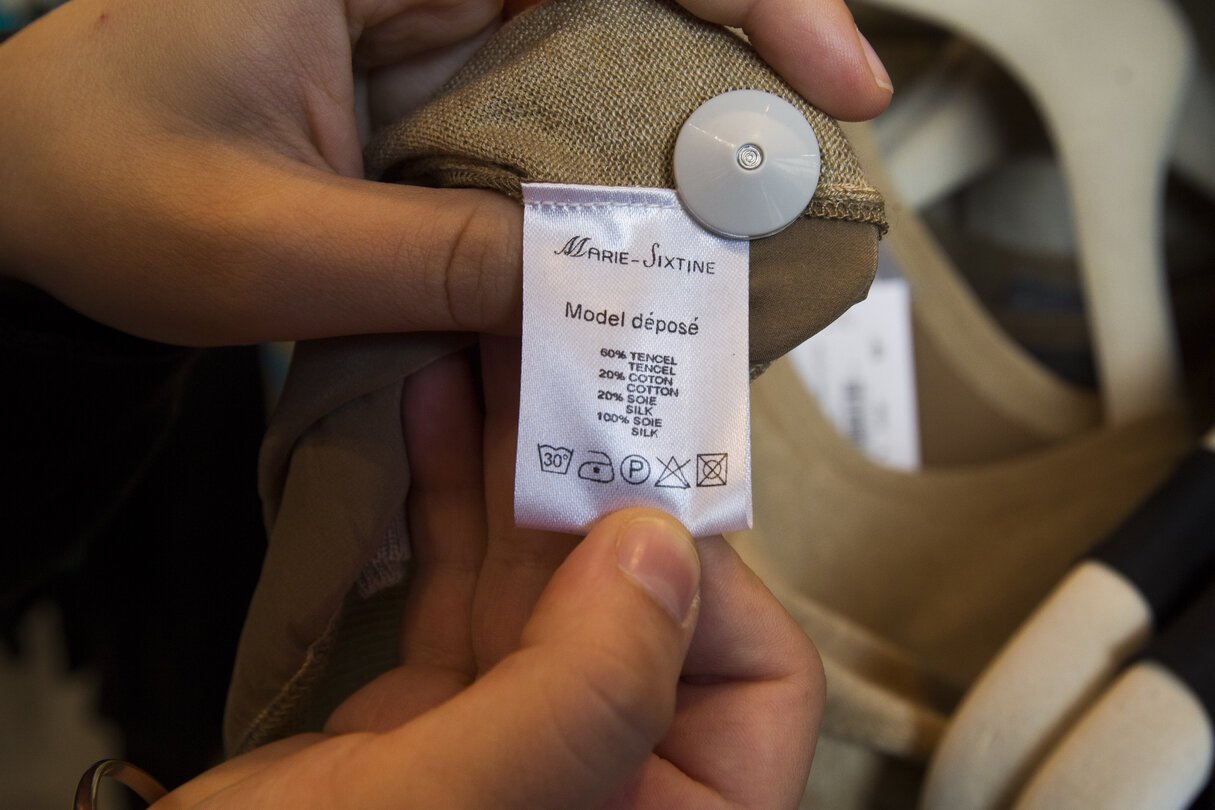
Cover photo: composition label on a garment in a shop in Brussels, © European Union 2012 - Source: EP.


Comments
No comments yet. Break the ice!
Log in to comment